

If you’ve ever struggled to cook steak perfectly — juicy in the center, evenly cooked from edge to edge — this sous vide steak guide is exactly what you need. With sous vide, you can achieve steakhouse-quality results every single time without stress or guesswork.
We’re Kiko and Med from StayFit Recipes, and we know how hard it is to stick to clean eating when your favorite meals feel out of reach. That’s why we put together this sous vide steak guide — to help you enjoy steak that’s healthy, tender, and full of flavor. During our 100-day fitness challenge, we discovered sous vide cooking and instantly fell in love. It gave us lean, perfectly cooked steak without extra oil or overcooking.
This step-by-step sous vide steak guide will walk you through everything: choosing the right cut, setting the perfect temperature, and finishing with a flawless sear. Whether you’re cooking for one or hosting a dinner party, this guide will help you master steak the StayFit way — delicious, healthy, and stress-free.If you’re ready to change the way you cook steak forever, keep reading — and check out our other sous vide recipes to see what’s possible.
Why Sous Vide Your Steak?
Cooking steak can be tricky. Pan-searing often leads to overcooked edges and an underdone center. Grilling can dry out a beautiful cut in minutes. That’s why this sous vide steak guide is such a game changer — it shows you how to cook steak perfectly every time.
Consistency and precision
This sous vide steak guide helps you lock in precise doneness, so your steak comes out just the way you like it, from edge to edge. By cooking steak in a temperature-controlled water bath, you avoid undercooking, overcooking, and uneven results.
Following our Sous Vide Ribeye Steak example, you’ll see why so many rely on a sous vide steak guide to take the guesswork out of steak night.
Juicier, healthier steak
By sealing steak in its juices and cooking gently, this sous vide steak guide ensures maximum tenderness and flavor. Even leaner cuts stay moist, and you only need a little oil to sear at the end. That means fewer calories but all the satisfaction.
Just like our Salt Beef Sous Vide recipe, the same principles apply — cooking low and slow for unbeatable results.
With this sous vide steak guide, you’ll feel confident cooking steak anytime, knowing it’ll be juicy, healthy, and consistently delicious.
How to Select the Right Steak for Sous Vide
Choosing the right cut is the first step toward success, and this sous vide steak guide will help you pick the perfect one. The beauty of sous vide is that it works with nearly any steak, but some cuts perform better depending on your goal.

Best cuts to use
This sous vide steak guide recommends tender, flavorful cuts for short cooks of 1–3 hours:
- Ribeye: rich and marbled for amazing flavor
- New York Strip: leaner, firmer, yet still tender
- Filet Mignon: buttery soft and ideal for special occasions
For longer cooks (6–8 hours or more), tougher cuts like flank, hanger, or skirt steak benefit from the extended time. They’ll become tender without losing their meaty flavor.
Thickness and fat content
A good sous vide steak guide also suggests aiming for steaks about 1–1.5 inches thick. Thicker steaks take longer to cook evenly, while very thin cuts can overcook during searing. Fatty cuts like ribeye render beautifully and stay juicy, while leaner cuts benefit from adding a pat of butter or herbs in the bag.
Prep matters
Before cooking, trim any excess fat and pat the steak dry. Season with salt, pepper, and herbs like thyme or rosemary. This sous vide steak guide also recommends using a vacuum sealer for the best results, but a heavy-duty zipper bag with the water displacement method works too.
By selecting and prepping your steak properly, this sous vide steak guide sets you up for success in the next step: choosing the perfect temperature.
How to Select the Right Temperature for Sous Vide Steak
Temperature is the most important decision you’ll make when cooking sous vide, and this sous vide steak guide will help you get it right. The beauty of sous vide is that you can choose your exact level of doneness and know your steak will be cooked evenly from edge to edge.
Why temperature matters
This sous vide steak guide is all about precision. Every degree makes a difference in texture and flavor. For example, a ribeye cooked at 129°F is beautifully medium-rare, with a tender and juicy bite. Cook that same steak at 140°F, and it’ll come out closer to medium, with a firmer texture.
A proper sous vide steak guide teaches you to avoid going too high. Temperatures above 145°F can dry out even the best cuts, defeating the purpose of sous vide cooking. Instead, stay within the recommended ranges below for perfect results.
Recommended temperature ranges
This sous vide steak guide suggests the following target temperatures for steak:
- Rare: 125°F — deep red, very tender
- Medium-rare: 129°F — pink and juicy
- Medium: 135°F — slightly firmer, light pink
- Medium-well: 145°F — less pink, firmer texture
- Well-done: 155°F+ — fully cooked through, but can be dry
For most cuts, medium-rare (129°F) is the sweet spot, balancing flavor, moisture, and tenderness. That’s why our Sous Vide Ribeye Steak and Salt Beef Sous Vide recipes both use similar gentle heat to protect the meat’s natural juices.
By using this sous vide steak guide, you can confidently set your water bath knowing the result will be exactly what you expect — every time.
Does Timing Matter for Sous Vide Steak?
Many people believe that sous vide cooking is “set it and forget it,” but this sous vide steak guide explains why timing still matters. While sous vide gives you a bigger window of perfection than traditional cooking, leaving your steak in the water bath too long can still affect the texture.
Minimum and maximum times
This sous vide steak guide recommends letting your steak cook at least long enough to heat through evenly. For most steaks, that’s about 1 hour per inch of thickness. Thinner steaks can be ready in just under an hour, while thicker cuts may need closer to 2–3 hours.
But don’t assume you can leave it forever. After about 4 hours, even tender cuts can start to turn mushy as the muscle fibers break down too much. This sous vide steak guide helps you strike the right balance so your steak stays juicy and tender without becoming soft or grainy.
Holding time for flexibility
One advantage of this sous vide steak guide is that it teaches you how to use the technique’s flexibility. If your guests are running late, or you’re not quite ready to eat, you can hold your steak in the water bath at the target temperature for up to 30–60 minutes past its optimal time without much noticeable change.
This makes meal prep and entertaining stress-free. Whether you’re following our sous vide chicken breast or experimenting with something new, this sous vide steak guide ensures you know exactly when your steak is ready — and when it’s time to take it out.
Timing might be more forgiving with sous vide, but as this sous vide steak guide shows, it’s still an essential part of getting steak just right.
Temperature and Timing Charts for Sous Vide Steak Cuts
One of the biggest advantages of using this sous vide steak guide is having clear, reliable reference points for any cut of steak. With sous vide, precision is everything — and knowing the right temperature and time for your steak guarantees perfect results every time.
Why charts are essential
Even though sous vide cooking is forgiving, following a chart like the one in this sous vide steak guide helps you avoid guesswork. Different cuts and thicknesses require slightly different times and temperatures to reach their full potential. A thick ribeye won’t behave the same as a thin sirloin, and lean cuts like filet mignon need a little more care to keep them juicy.
Recommended sous vide steak temperatures and times
This sous vide steak guide recommends the following settings for common cuts and doneness levels:
| Cut | Doneness | Temp | Time |
|---|---|---|---|
| Ribeye | Medium-rare | 129°F | 1–3 hours |
| Filet Mignon | Medium | 135°F | 1–2 hours |
| Sirloin | Medium-well | 145°F | 1–2 hours |
When using this sous vide steak guide, keep in mind that you can hold the steak at the desired temperature a little longer if needed, but avoid going beyond 4 hours for tender cuts to maintain texture.
This sous vide steak guide isn’t just about cooking — it’s about giving you the confidence and clarity you need to serve steak exactly the way you like it.
How to Cook a Steak Sous Vide, Step by Step
This sous vide steak guide breaks down the process into easy steps so you can cook steak perfectly every time. Follow along, and you’ll feel like a pro in no time.
Step 1: Preheat the Water Bath
Set your sous vide precision cooker to the desired final temperature (use the chart earlier in this sous vide steak guide). Wait for the water bath to reach temperature before adding the steak. This ensures even cooking from the start.
Step 2: Season Generously
Season your steak all over with salt and pepper. Don’t forget the edges — this sous vide steak guide recommends full coverage for better flavor. You can add a sprinkle of garlic powder or other spices if you like.
Step 3: Add Aromatics
Place your seasoned steak in a sous vide bag. Add a few sprigs of rosemary, thyme, or even sliced shallots to the bag for extra aroma and flavor.
Step 4: Seal the Bag
Use a vacuum sealer if you have one. If not, follow the water displacement method described earlier in this sous vide steak guide: slowly lower the bag into water to push out the air, then seal just above the water line.
Step 5: Cook in the Water Bath
Gently submerge the sealed steak into the water bath. Make sure it’s not blocking the circulator and is fully underwater. Cook for the time recommended in this sous vide steak guide, depending on thickness and doneness.
Step 6: Remove and Dry
When done, remove the steak from the bag and place it on a paper towel–lined plate. Pat it dry very well — this sous vide steak guide emphasizes this step because moisture can prevent a good sear.
Step 7: Finish on the Stovetop
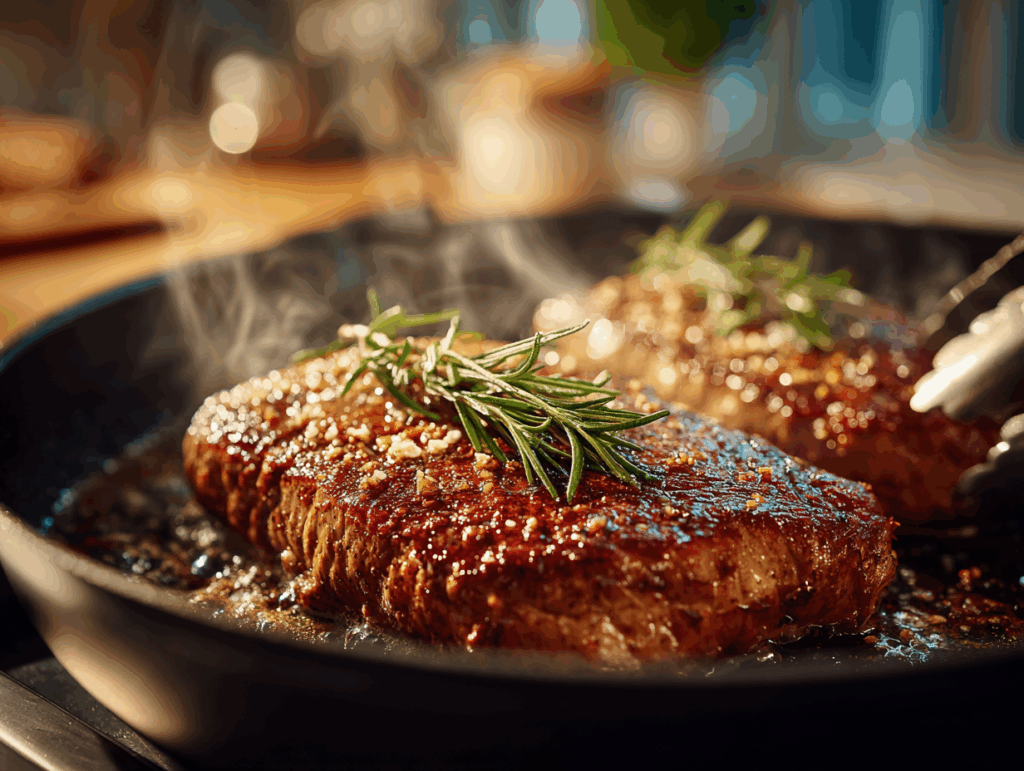
Heat a heavy skillet over high heat until smoking. Add a tablespoon of neutral oil, then lay the steak down gently. Sear for 15–30 seconds per side, flipping as needed until a crust forms. For added richness, toss in a knob of butter and fresh herbs during the last flip.
Step 8: Sear the Edges
Hold the steak with tongs and roll it along the edges in the pan to brown the sides. This takes about 45 seconds and makes your steak look (and taste) professional.
Step 9: Rest and Serve
Place the steak on a cutting board. You can serve immediately — sous vide steak doesn’t need a long rest. Slice against the grain and serve hot, with a little flaky sea salt on top.
This sous vide steak guide shows you just how easy it is to master steak at home, from prep to perfect sear. Now you’re ready to impress every time.
Finishing a Sous Vide Steak on the Stovetop
Searing is where your steak truly comes alive — adding a golden crust, deeper flavor, and irresistible aroma. This sous vide steak guide explains how to finish your steak on the stovetop like a pro.
Why sear after sous vide?
Sous vide cooks steak perfectly on the inside but leaves the outside pale and soft. This sous vide steak guide shows you how a quick, high-heat sear creates that classic steakhouse look and taste without overcooking the center.
Preheat your skillet
Turn on your kitchen vent and open a window — it’s about to get smoky. Place a heavy cast-iron or stainless-steel skillet on your hottest burner. Add a tablespoon of high-smoke-point oil (like canola or vegetable). Wait until the skillet is shimmering and just starting to smoke.
Sear quickly for maximum crust
Lay your steak in the skillet with tongs, pressing it down gently. Sear for 15–30 seconds on the first side, then flip and repeat on the other side. Flip every 15–30 seconds until a deep brown crust forms, usually 1–2 minutes total.
This sous vide steak guide recommends adding a knob of butter and a sprig of rosemary during the final flip for added richness and aroma. Tilt the pan and spoon the hot butter over the steak for extra flavor.
Don’t forget the edges
Use your tongs to hold the steak upright on its edges, rolling it along the skillet until all sides are seared. This adds even more texture and makes your steak presentation-worthy.
This sous vide steak guide proves you don’t need a fancy setup to create steakhouse magic — just a hot skillet and the right technique. Searing is the final step in transforming your perfectly cooked steak into a masterpiece.
Finishing a Sous Vide Steak on the Grill
If you love a smoky flavor and gorgeous grill marks, this sous vide steak guide has you covered. Finishing your sous vide steak on the grill combines precision cooking with the irresistible taste of open flames.
Why finish on the grill?
While the stovetop is convenient, the grill adds a unique, charred flavor and an outdoor cooking vibe. This sous vide steak guide suggests the grill for cookouts, summer meals, or anytime you want that authentic barbecue feel.
Set up for high heat
Your goal is intense, direct heat to sear the outside without overcooking the center. This sous vide steak guide recommends lighting a full chimney of charcoal and spreading the coals over one half of the grill. Let the grill preheat for 5–10 minutes until the grates are hot and clean. On a gas grill, set one side to the highest heat and allow it to preheat fully. Oil the grates with tongs and a paper towel for a non-stick surface.
Sear and rotate
Place your steak directly over the hottest part of the grill. Sear each side for about 30 seconds, flipping and rotating every 15–30 seconds to build even grill marks and prevent flare-ups. If the flames rise too high, move the steak briefly to the cooler side until they die down.
Serve immediately
Once you’ve achieved a deep brown crust with nice grill marks, remove the steak from the grill and serve immediately. This sous vide steak guide reminds you there’s no need to rest — sous vide locks in the juices already.
By finishing your steak on the grill, you get the best of both worlds: the precision of sous vide with the flavor of fire. This sous vide steak guide ensures your steak always turns out beautifully, no matter where you cook it.
Frequently Asked Questions
These are the most common questions readers ask about cooking steak with sous vide. This sous vide steak guide answers them all so you can feel confident every step of the way.
How long do I have to sous vide a steak?
Technically, you only need to cook long enough for the steak to heat through evenly — usually 1–2 hours. But this sous vide steak guide explains that holding it a little longer (up to 3–4 hours) won’t hurt and can even improve tenderness on some cuts.
What is the downside of sous vide?
The biggest downside this sous vide steak guide notes is that sous vide takes longer than traditional methods. You also need to sear afterward to get a crust, and if you cook too long, the texture can become mushy. It also requires some equipment, like a sous vide machine and bags.
Why is my steak tough after sous vide?
If your steak turns out tough, this sous vide steak guide suggests checking your temperature — cooking above 140°F can dry it out. You might also be using a very lean or tough cut without adjusting time properly. Always finish with a sear for the best texture.
Is sous vide safe?
Absolutely. Cooking steak with sous vide at temperatures above 130°F is safe and kills harmful bacteria. This sous vide steak guide follows all food safety guidelines so you can cook worry-free.
Can you sous vide frozen steak?
Yes! One of the perks of this sous vide steak guide is that you can cook steak straight from frozen. Just add 30–60 minutes to the recommended cook time to account for thawing.
Do you have to sear after sous vide?
Technically no, but this sous vide steak guide strongly encourages it. Searing creates the caramelized crust and rich flavor that make steak irresistible. Without it, the outside of your steak will look pale and feel soft.
Conclusion
With this sous vide steak guide, you now have everything you need to make steak night stress-free and delicious. From picking the perfect cut to setting the right temperature and finishing with a gorgeous crust, every step is covered to help you feel confident in the kitchen. Whether you prefer stovetop searing or smoky grill marks, this guide ensures your steak is juicy, tender, and perfectly cooked every time.
Let’s StayFit — together.For More follow us on facebook & pinterest